
EqualTogether
5min read
Work duration: 2yrs
My Role: Solo founder
Team: Me, volunteer friends, investor coaches
Key Outcomes:
- Learned more than I ever set out to
- Running/leading a business
- Solo vs partner foundership
- Financial planning
- Necessity-of + boundaries-in compromise
- New respect for Sales & BizOps
- Learned some hard truths
- Drained my retirement
Need: In 2014 conversations about the tech industry’s slide into a young/white/male monoculture were heating-up. No public data was available to support or deny any of the allegations, however. As a woman in tech, I needed little more convincing than my own experiences had provided—and as a person inclined toward action, I found myself growing restless in the climate an absence of actionable, public evidence had cultivated.
Response: An investor friend offered to back my time spent on a modest research effort. Shortly thereafter I received proper funding from Y Combinator (YC) to craft a solution opportunity that arose from my research, with fiscal sponsorship from Netroots Foundation to proceed in a non-profit capacity—and coaching from YC partners to guide my journey.

Incentivized transparency rooted in humble optimism.

Calling bullsh*t on “the pipeline” excuse.

API ported data to narrate stories.

Telling the data stories that matter the most to disenfranchised people, not PR.
Many years later, the name does make me cringe. Communicating concepts of moving together towards a future rooted in equity, was its intent. As I’ve grown in my journeys with anti-racism, feminism, disability rights, and de-colonization, however, I now only see allusions to assimilationist -ick in the name. So: as a note in 2023 on work I did in 2014, please know that if you’re cringing—I’m right there with you. Growth is great, and I hope that my own growth journey never ends!
Approach
My initial plan was to spend 3 months doing nothing but immersive research to learn more about why existing “diversity” efforts had failed this industry known for its bold and rebellious cultural inclinations. Less than one month in however, the lack of clear, public data for conversations and solutions to focus on, became clear as a major pain-point any prospective solutions would need resolved before demonstrable change could happen.
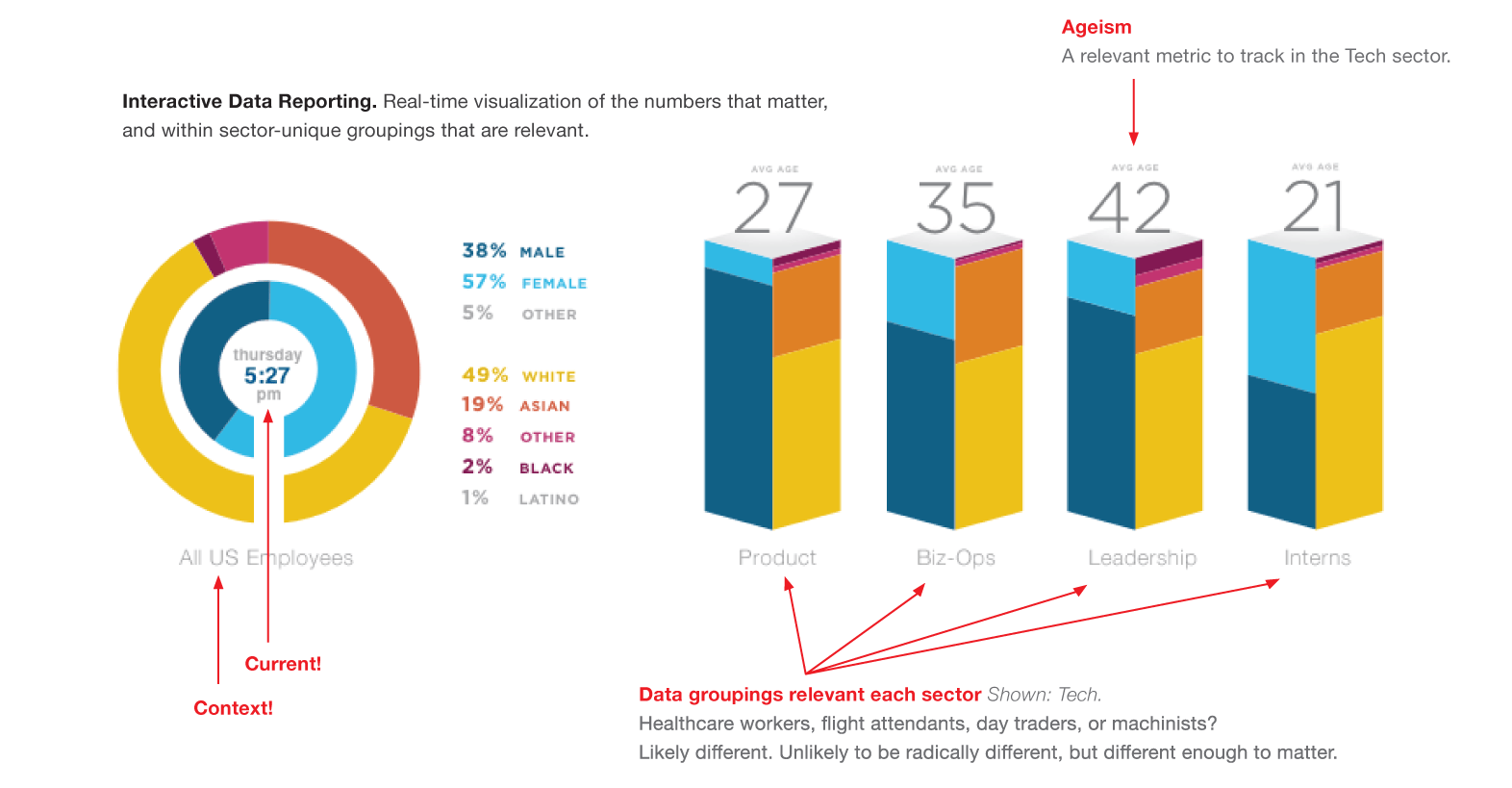
Public evidence sharing & community co-learning as change catalysts.
EqualTogether’s reporting platform was created to function as an opt-in analytics & benchmarking tool for capturing human capital metrics from resume solicitation to employee tenures, and publishing those numbers in a relevant, user-centric, and standardized fashion to tell the most compelling diversity narratives possible.
Opting-in to this platform required community participation for all “partner companies” to shoulder a mutual responsibility for co-creating actionable solutions; solutions bound to no copyrights, and licensed to share far and wide. Early feedback from customer prospects supported the interest in this. Non-partner companies who had shared EEO-1 reports publicly, would also be included—and identified as such.
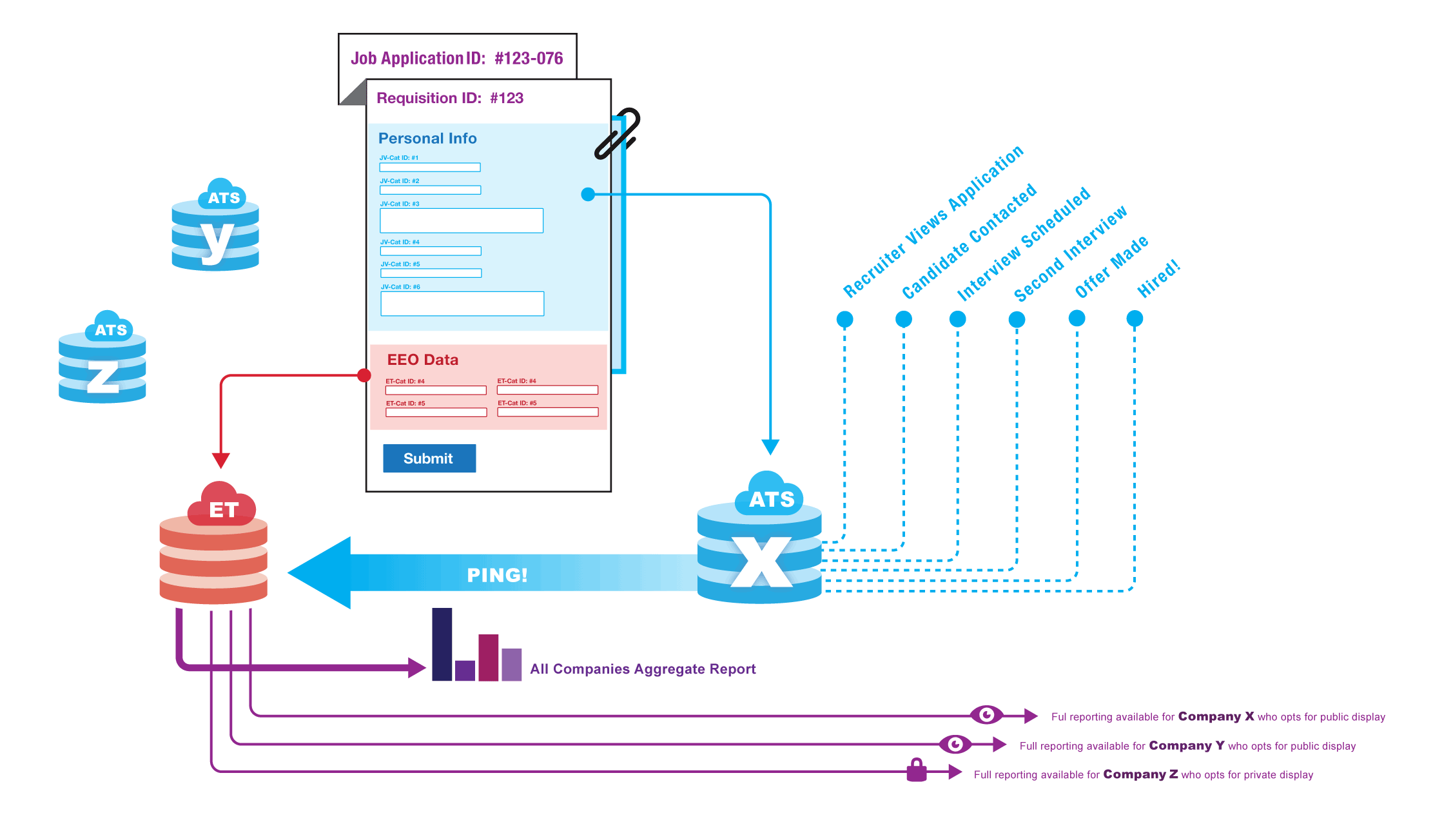
Not just telling the whole story, but consistent stories.
When the flood of companies releasing complied EEO-1 statistics in PR-guided diversity reports happened—especially Apple’s, claiming a far higher number of Black employees than anyone who’d spent time at 1 Infinite Loop could trust as legit—the need also became clear for consistent language, taxonomies, and governance, to guide those stories.
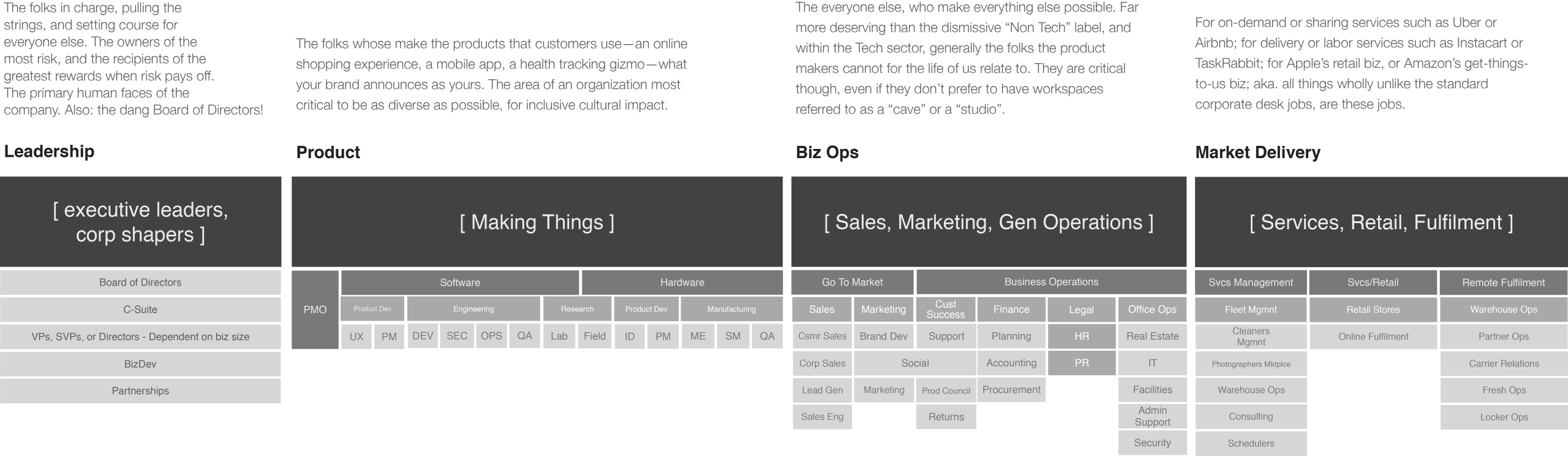
So, what happened?
My YC advisers had been confident that “getting help” from someone within the startup community, would be an appealing pitch to influential companies. To achieve a proper seed round and launch an official MVP, I met with dozens of HR representatives executives—some from the organizations shown in the prototype, more from lesser-known organizations. From almost all of them, legal departments shut down their organization’s involvement after the first or second meetings.
One well-known organization had not known they’d hit their headcount threshold for filing EEO reports (which, I also learned is a common occurrence in tech) three years prior. Its legal department contacted me, directly. When PR and lawsuits matter more than doing the right thing—that is a far bigger problem than I ever set out to conquer. Naive as that may sound, it’s the truth. Had I the savings and the ability to self-sustain such an effort, I’d have welcomed it. Not only did I not, but hustling this work on the side of freelance design work to keep my bills paid, I also did not have the emotional fortitude to push through.
Intersectionality & accountability were inflexible requirements
Prospective investors loved the idea of raising-up women in tech, yet were clearly uncomfortable by the focus on intersectionality and accountability; not just to me, but to other for-profit organizations. The community part of things delighted HR folks, stunted executives, and confused investors. Conversations with young, able-bodied, White male investors expressed an optimism in helping my people (I am White, thin, able-bodied, young-appearing, and cis-het), but not the rest. Black and Latinx HR consultants I sought for counsel were un-surprised—though at the beginning had been intrigued enough by something they’d never seen before in EqualTogether, that I felt strongly I had to give it a shot. How investors responded, is common in VC—and why a lot of both good and bad ideas pivot into business ventures capable of making billions. Something that was never a goal of my own. I learned a lot. I hope to never stop learning.
If I were willing to package an offering that companies could feel good writing a check to, be held to no obligations by, that would cause zero controversy, and would never be held accountable by, it could have worked. That just was never the point, though.
Controversy was never the point, either. The point all along, was that change is entirely possible if it is desired. I’m proud that I took the risks, and I’m proud that I did the work. What leaders of organizations don’t want, however, I cannot force. Confronting your own privilege means vulnerability—and vulnerability is anathema to Silicon Valley’s culture of hustle & muscle. Yes, thanks in large part to the influence of the organization that funded this work in the first place.
Exit to make room for those better equipped to lead DEIB
Anti-racism, de-colonization, diving deep into disability, the very real power and magic of intersectionality; my experiences from this project introduced me to SO MANY concepts new to me. My delight in learning, off the charts—and my recognition that others in the space had insight, scholarship, life-experience, and subsequent motivation to push past where I could, I felt had to be honored. Also: my VC poker-face stinks, and my heart is in serving users through product development. I needed to honor those tough facts, too.
Much as I did walk away from EqualTogether, I will never walk away from holding companies accountable for the impacts made by their control of capital, of influence, and of the cultures they shape that dominate the lives of millions. Labor matters. Culture matters. Representation matters. Equity matters. Much more matters, than market-caps, valuations, IPOs, marketshare, competition, or wealth. It is my hope that someday, more organizations and leaders will rise to that challenge. Winning, together, is possible. Until then, contributing to that equitable future by ensuring equity in product development, is where I’m best suited—still learning, every day—and committed to continuing the fight.